Heat your room.
Mine Bitcoin.
Get paid for the warmth.
Satostat is a wall-mounted electric radiator whose heating element is an array of Bitcoin mining ASICs. Every watt that warms the room also hashes on the network, and the rewards land in your wallet through the Satostat iOS app.
14.3 kWh into the room today
1,412 sats · 28% of today's heat paid back
The world's problem, and the radiator that pays you to fix it.
Satostat started as a patented six-board mining radiator built in the UK during the 2022 energy crisis. The silicon has changed to Bitcoin ASICs; the problem it was built for has not.
The problem
Heating is unaffordable
As of 2022, more than a third of Britons could not afford to heat their homes to a comfortable level. Every winter since, the gap between tariffs and incomes has stayed open.
Fossil fuels drive warming
Gas boilers and fossil generation release vast amounts of harmful by-products. Domestic heat is one of the last large sectors still to be electrified.
Business bills keep rising
Commercial property owners continue to see energy costs climb, the most visible impact of the energy crisis. Heat is a cost line with no return.
The solution
Same heat, plus income
The same or better heating than a traditional electric radiator, while the unit earns Bitcoin rewards for the household. Heat you were already paying for becomes heat with a rebate.
No fossil fuel at the point of use
Fully electric. Paired with rooftop solar or a green tariff, the heat and the hashing are both zero-carbon at the home.
Commercial heat that pays back
For offices, workshops and communal areas, rewards offset the cost of warming the space. Multi-unit fleets report energy and earnings per room.
Market
Everyone who needs to be warm in winter is a potential user of a heater that pays.
The addressable base for any fully electric heating appliance with a network connection.
Valued at $881.7 billion in 2020 and forecast to reach $1.9 trillion by 2030 at 8.4 % CAGR. Electrified heat is the fastest-moving slice.
How Satostat makes money
Hardware
Radiators and desktop units sold direct and through installers. Hardware margin on a premium electric radiator with a serviceable board bay.
App Pro
Free app for control and payouts. Optional subscription for tariff optimisation, multi-home fleets, exports and advanced scheduling.
Pool share
Default pool routing carries a small fee share, with users free to point the unit at any pool or their own node.
Pilots and retrofit
Paid pilot deployments with housing providers and commercial landlords, feeding the government-funded retrofit route below.
Timeline
Founded as an idea: change how homes are heated by putting mining hardware inside the radiator.
The world's smallest six-card mining system with CPU mining built, setting the form factor.
Patented design and working prototype of the mining radiator completed.
Plan set, 3D renders and investor deck. Partnership model with governments and housing associations defined.
Further prototype stages to reach the finest level of radiator possible before market.
Platform moves from GPU and CPU cards to SHA-256 Bitcoin ASIC hashboards. Thermal targets recalculated.
Rebranded as Satostat. iOS app, derived plan set and funding programme under way.
One watt in. Heat and hashes out.
An electric heater converts electricity to heat at 100%. So does a mining ASIC. The difference is that the ASIC does useful proof-of-work on the way, and the Bitcoin network pays for it.
Mains to hashboard rails
- Input
- 230 V AC, 13 A plug, UK/EU
- PSU
- Titanium-class, active PFC
- Envelope
- 400 / 600 / 800 W set by heat mode
ASIC array does the work
- Silicon
- 5 nm SHA-256 ASICs
- Efficiency
- ≈ 21 J/TH at the wall
- Output
- Up to 38 TH/s, 100 % as heat
Room warms, wallet fills
- Heat path
- Fin stack → vertical airflow
- Reward path
- Pool share → app wallet
- Payout
- On-chain or Lightning, daily
Five layers between the silicon and your skin.
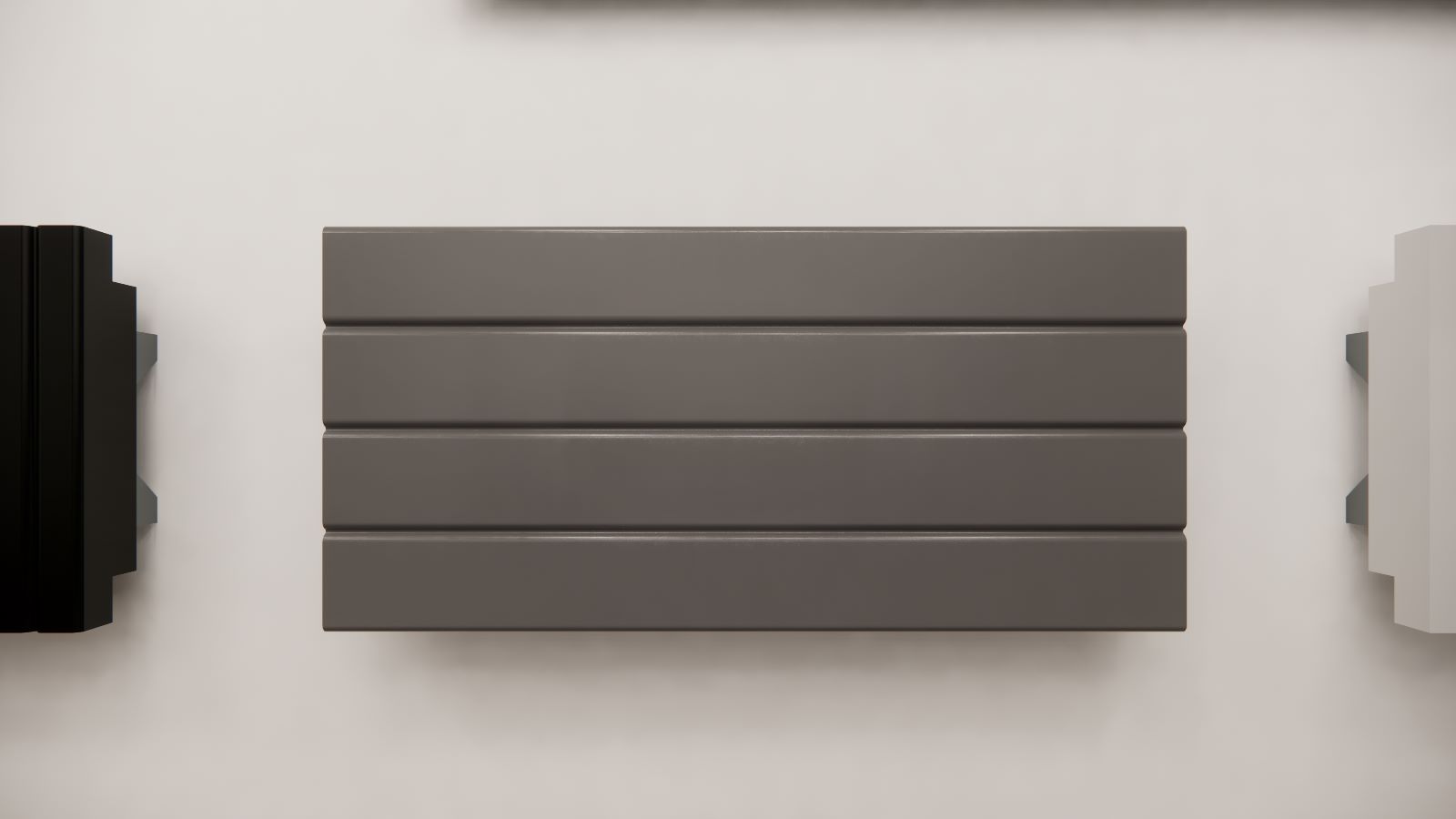
The radiator is a pressed galvanised-steel shell around a vertical air channel. Two rows of six fans push intake air up across the hashboard stack and out through the top vent, so the room fills with warm air from the top down.
Galvanised sheet pressed as one piece, powder coated. Top slot is the only exit vent, so convection carries the air column upward.
Extruded fins bonded to the hashboard heatsinks spread the load so the front surface sits in the 48–68 °C band and never spikes.
Three sets of two. The number of active boards is the primary heat control; fan speed is the secondary. Boards hot-swap through the rear service hatch.
Moulded into the rear bracket. Row B pushes across the array, row A pulls up to the vent. 120 mm, fluid bearing, PWM.
Wall-mount rail, PSU bay, Ethernet and mains entry. The air-compliant cage holds the boards 25 mm off the shell.
| Heat mode | Active boards | Wall power | Hashrate | Front surface | Room output | Acoustic |
|---|---|---|---|---|---|---|
| ECO | 2 of 6 | 400 W | 19 TH/s | 48 °C | 20–28 °C | < 28 dB(A) |
| COMFORT | 4 of 6 | 600 W | 28 TH/s | 58 °C | 28–38 °C | < 34 dB(A) |
| MAX | 6 of 6 | 800 W | 38 TH/s | 68 °C | 38–48 °C | < 40 dB(A) |
Room output is the air temperature at the top vent. Surface and acoustic figures are design targets measured at 20 °C ambient, 1 m. The thermostat modulates within a mode by trimming board clock, so power is continuous between 400 and 800 W.
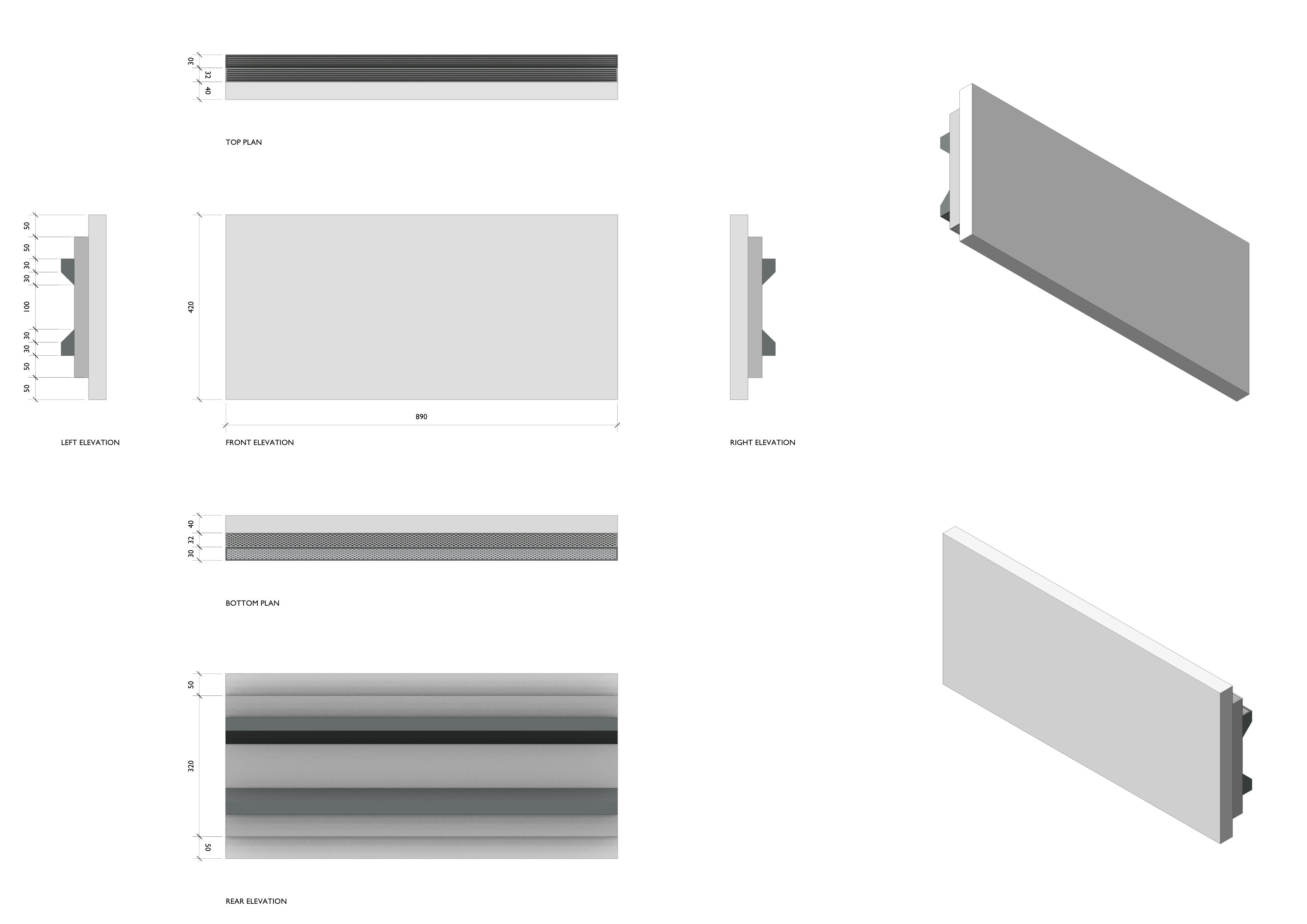
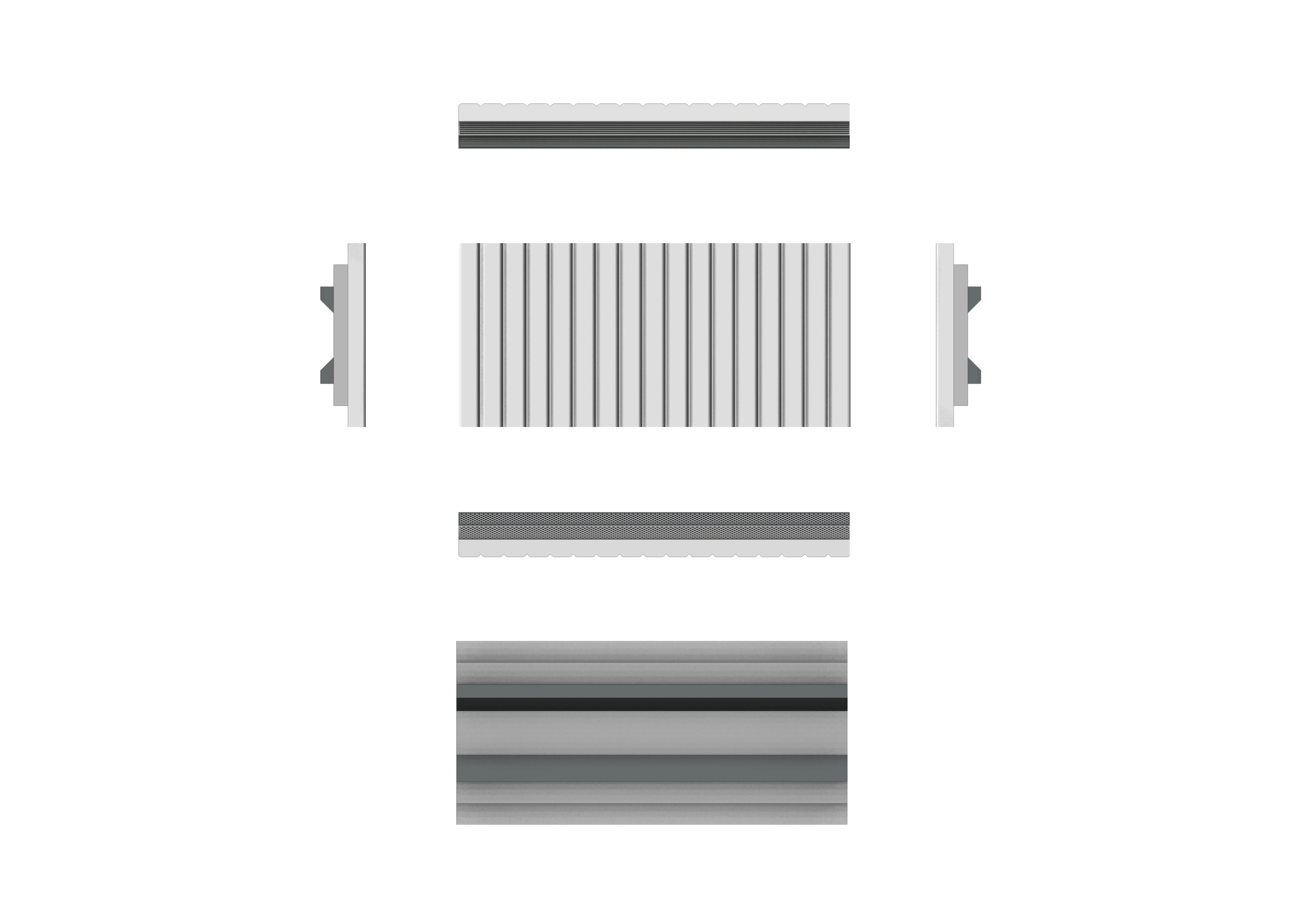
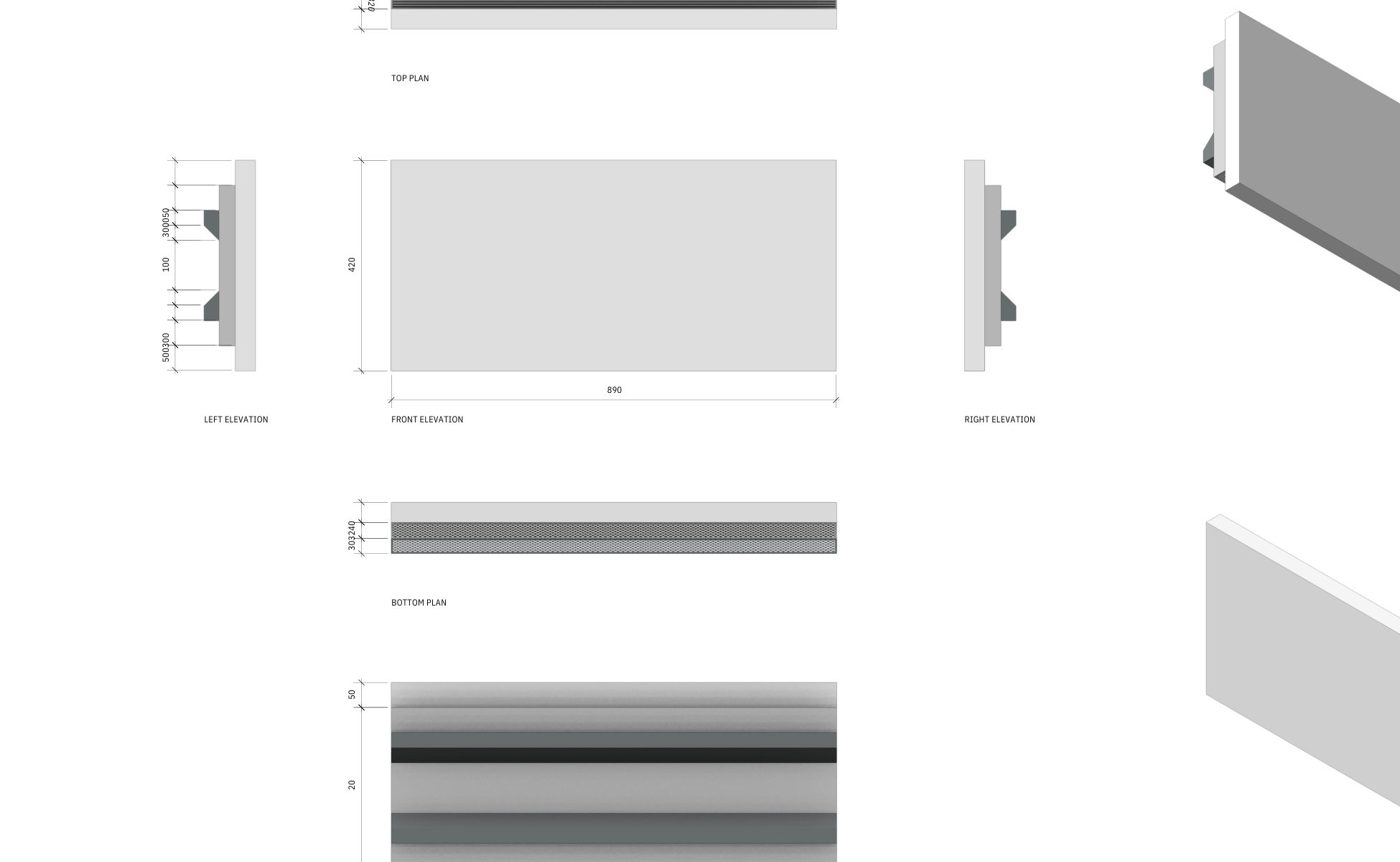
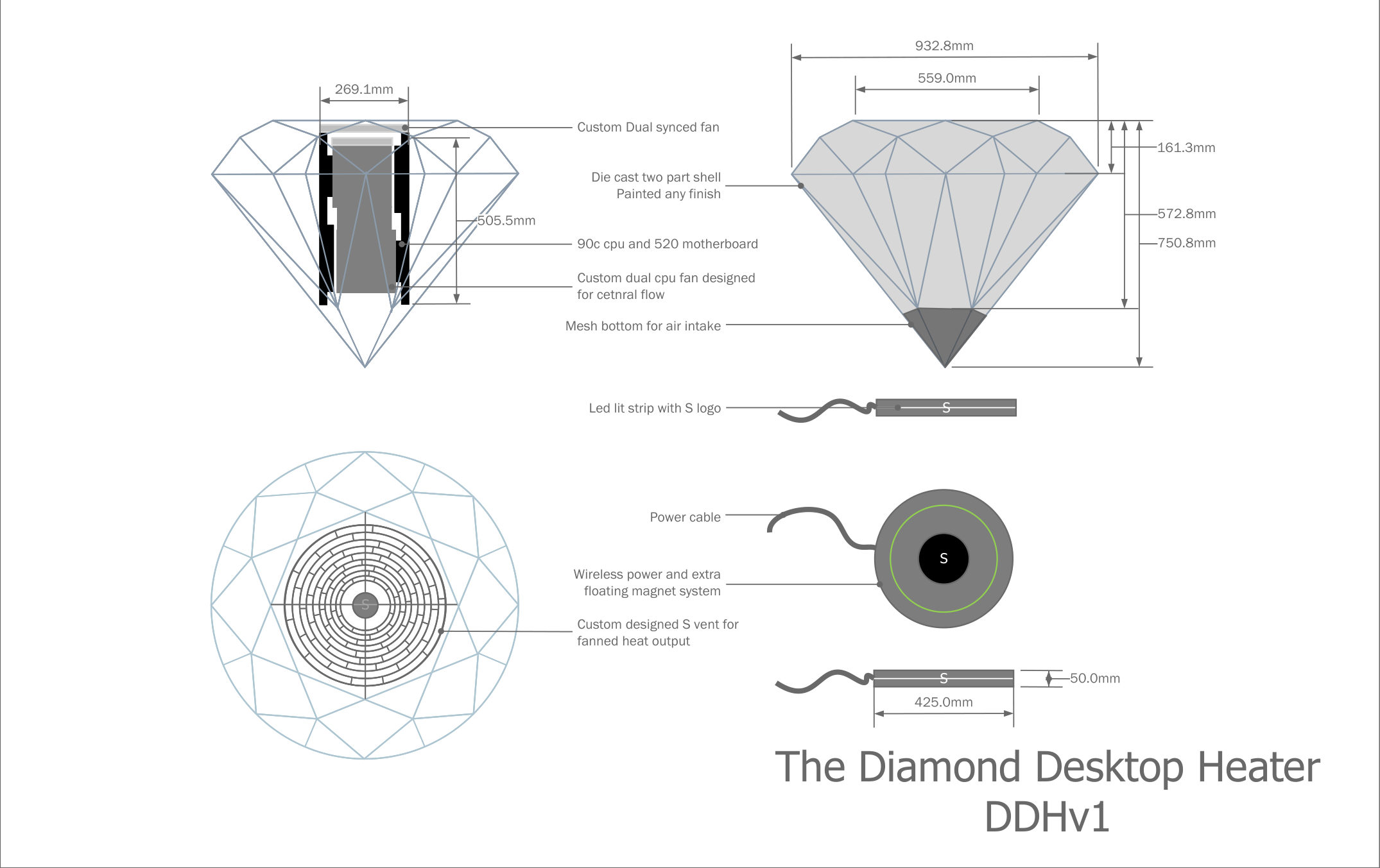
The original plan set.
Dimensioned elevations, sections and renders from the 2022 design programme, with the desktop heater drawing from 2023. Click any sheet to open it at full size.

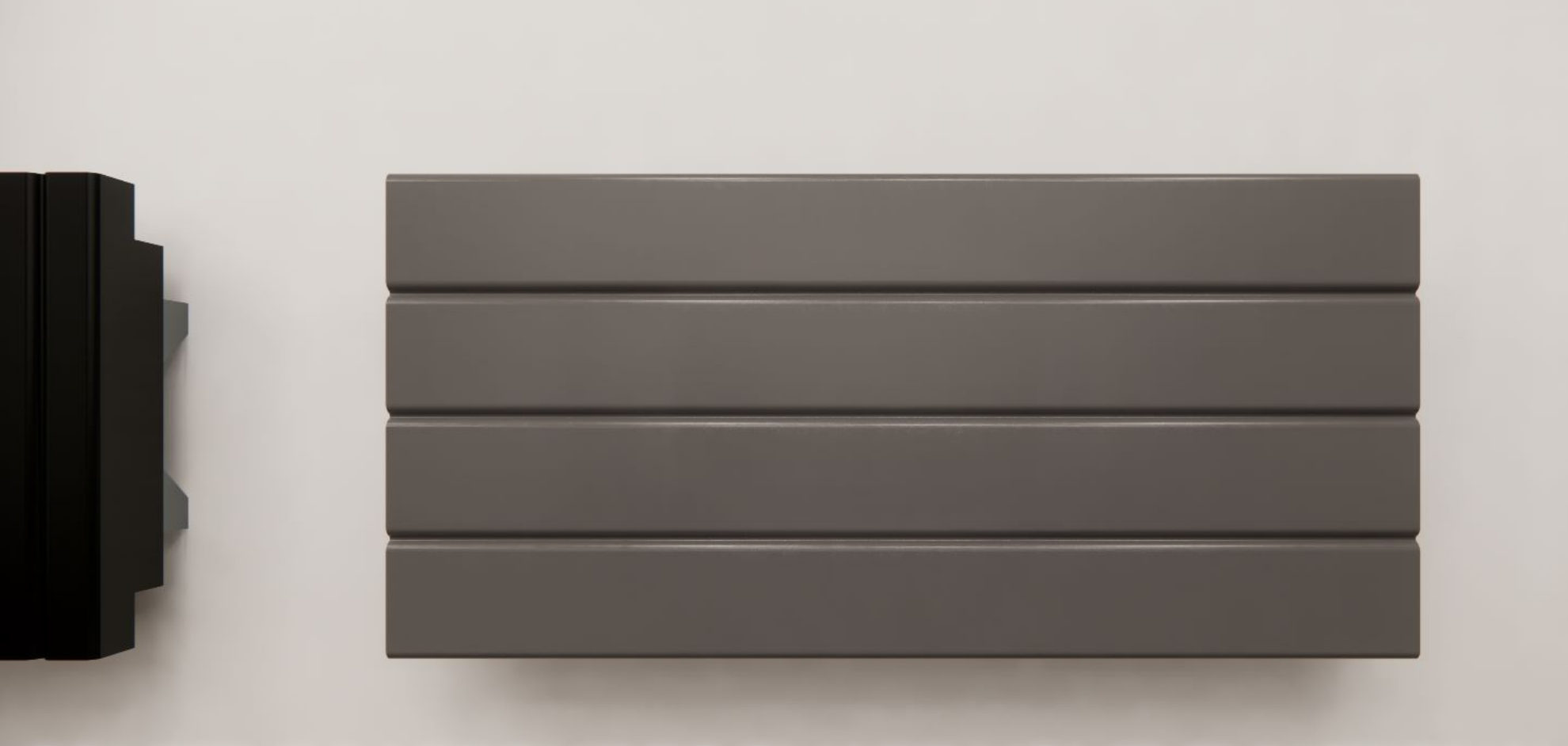




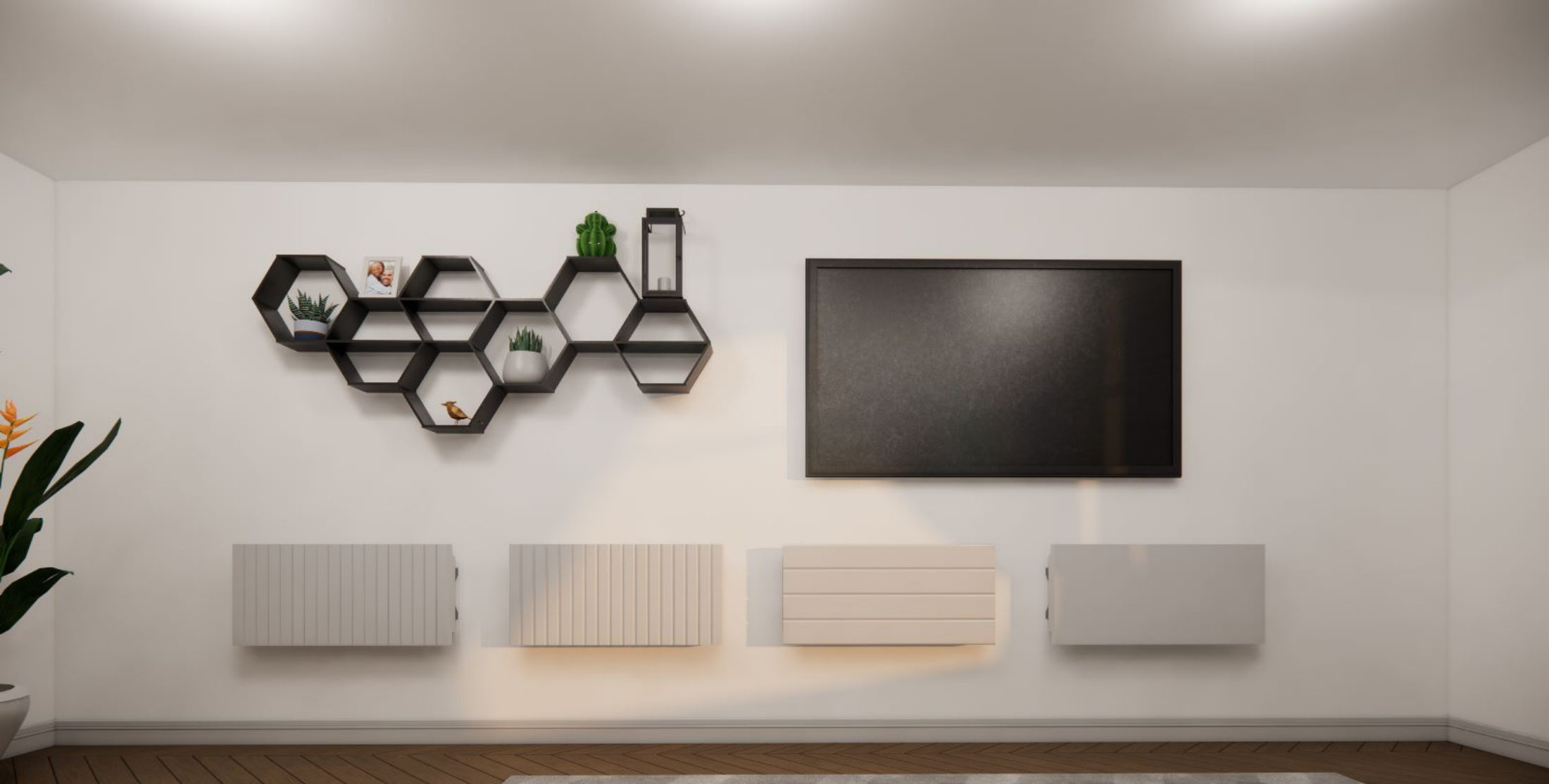
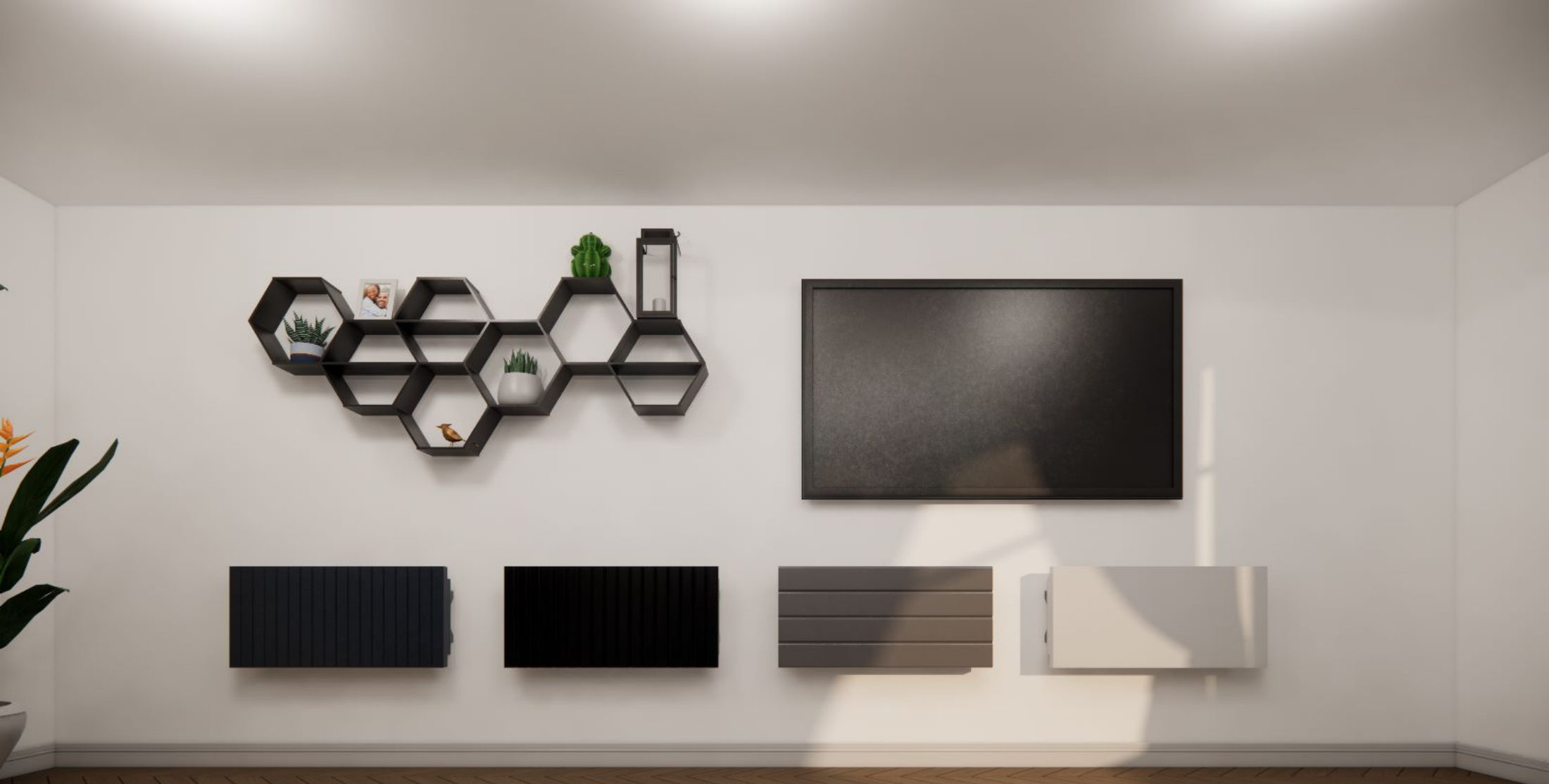
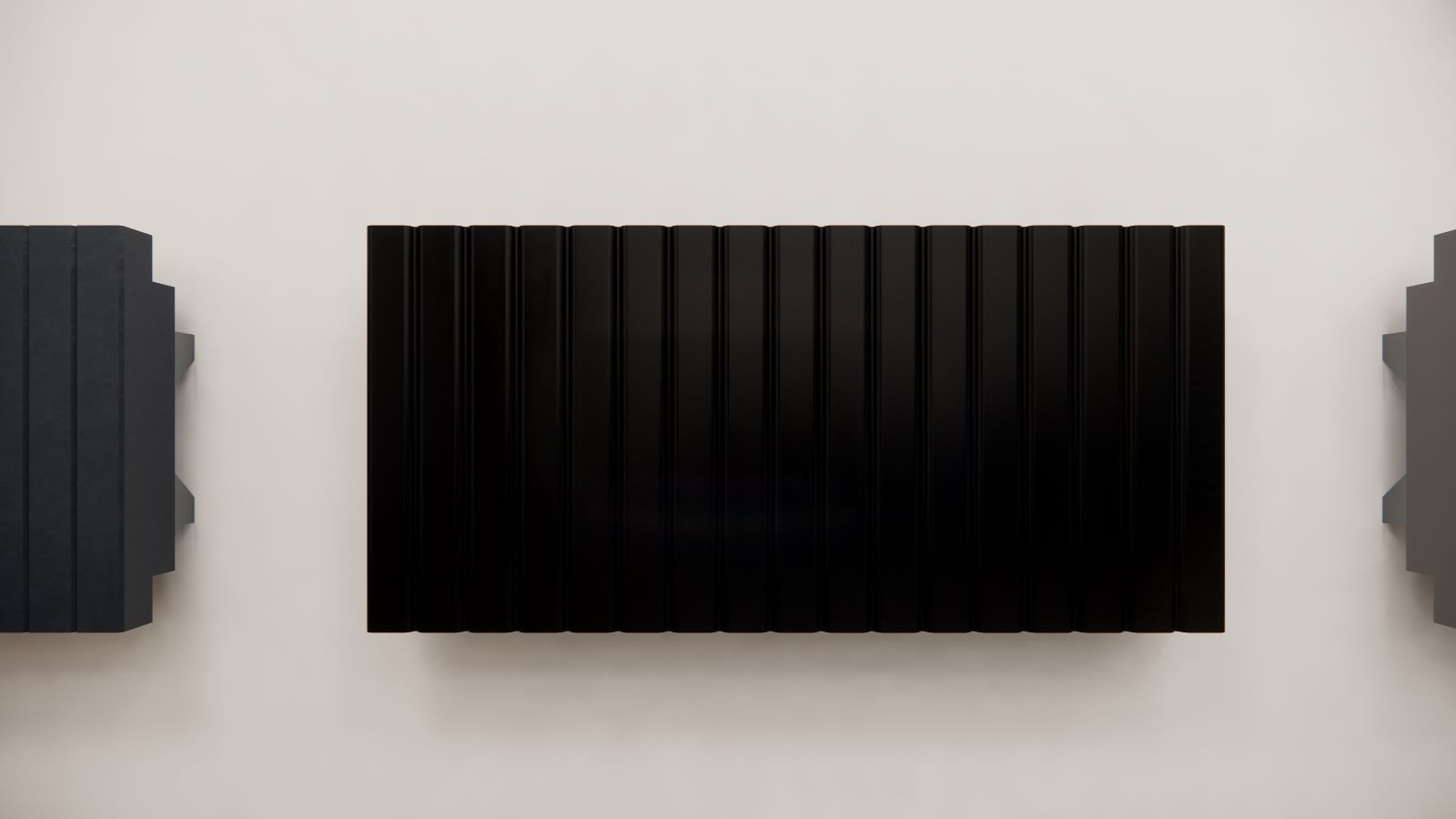

New drawings built from the plan set.
Six sheets derived from the V1 dimensions, drawn for the ASIC configuration. Board bays follow the three-column layout of the original, so the die-cast family and the mounting hardware share parts with V1.
A proper miner, not a novelty.
The hashboards, firmware and network stack are what you would expect in a data-centre unit, scaled to a room and tuned for quiet, consistent heat instead of peak hashrate.
Hashboards
- AlgorithmSHA-256d (Bitcoin)
- ASIC process5 nm
- Chips per board12
- Board hashrate6.4 TH/s
- Efficiency, wall≈ 21 J/TH
- Clock rangeUnderclock 40–100 %
- Die temp limit95 °C, auto throttle
- ServiceRear hatch, tool-free
Firmware
- ProtocolStratum V2, V1 fallback
- PoolAny, 3 with failover
- Solo modeOwn node via RPC
- UpdatesSigned OTA, A/B slots
- ThermostatPID on room sensor
- Scheduling7-day, tariff aware
- Local APIREST + MQTT, LAN only
- LogsOn-device, exportable
Control & connectivity
- ControllerQuad-core ARM SoC
- Wi-FiWi-Fi 6, 2.4 / 5 GHz
- WiredGigabit Ethernet
- Local radioThread + BLE for setup
- Sensors12 × NTC, inlet/outlet, current
- On-unit controlCapacitive mode + dial
- Multi-unitUp to 16 per home
- SecuritySecure boot, TPM key store
Safety cut-outs
Independent thermal fuse on the front panel at 85 °C, board over-temp throttling at 95 °C die, over-current and earth-leakage protection in the PSU bay.
Surface compliance
Designed to the room-heater surface temperature limits in IEC 60335-2-30. Front panel stays below the metal-surface threshold at every mode.
Certification targets
UKCA and CE marking, EN 55032 / 55035 EMC, RoHS and WEEE. Pilot units ship under a test-and-evaluation programme before full certification.
Privacy
Telemetry stays on the unit and in your app. Pool credentials and payout addresses are stored in the TPM; nothing is pooled through Satostat servers.
Thermostat and wallet in one app.
Set the room temperature, choose how hard the radiator works, and watch the rewards arrive. The app is the controller, the earnings ledger and the payout wallet, and it works over your LAN when the internet is down.
The phones above are live. Try them.
The thermostat always wins. Set a room target and the radiator picks the lowest mode that holds it, then steps up when the room asks for more.
Import an agile or time-of-use tariff and the schedule shifts MAX mode into the cheapest half-hours, pre-heating the room before peak pricing.
Payout addresses are generated on your phone. Lightning for small daily payouts, on-chain for larger sweeps. Export a CSV for your records at any time.
Group up to sixteen units by room. One screen shows total draw, total hashrate and per-room temperature with history.
Control over the LAN with no cloud dependency. If the internet drops the unit keeps heating as a plain electric radiator until the pool reconnects.
Lock-screen widgets for sats today and room temperature. Shortcuts for mode changes, so "set the living room to Eco" works from your wrist.
What the warmth costs after rewards.
A conventional electric radiator turns every kilowatt-hour into heat and nothing else. QuantumRad turns the same kilowatt-hour into heat plus a share of block rewards. Change the assumptions and see the net cost move.
Daily cost of the same heat · £
Rewards are estimated as your share of network hashrate × 144 blocks × 3.125 BTC subsidy, less pool fee, and exclude transaction fees. Mining income varies with price, difficulty and uptime and is not guaranteed. Electricity, hardware wear and tax are yours to account for. Defaults are placeholders for you to change, not forecasts.
Three form factors. One engine.
The same hashboard, controller and app across a wall radiator, a die-cast family in three sizes and a desktop unit. Everything is serviceable and every board is interchangeable.
QuantumRad V1 wall · 6 boards
The launch unit. Pressed galvanised-steel shell, six hashboards, two fan rows, wall rail mount. The first production radiator and the reference platform for the app.
- 890 × 420 × 100 mm, 14.5 kg
- 400–800 W, 19–38 TH/s
- Powder coat: carbon, bone, gold
QuantumRad V2 die-cast · 2 / 4 / 8 boards
A die-cast three-layer shell with sculpted fins, offered in a small two-board unit for bedrooms, a four-board standard and an eight-board unit for open-plan and commercial rooms.
- 135 W to 1.1 kW across the range
- Flush wall or freestanding feet
- Shared boards and PSU modules with V1
Diamond Desktop DDHv1 · 1 board
A faceted two-part die-cast shell over a single hashboard, mesh intake below, dual synced fans and an S-vent that throws warm air across a desk. A lit strip along the base shows mode.
- 932.8 × 572.8 × 161.3 mm
- 135 W, 6.4 TH/s, under 25 dB(A)
- Painted any finish, tip-over cut-out
Satostat is working on government funding.
Fuel poverty and heat decarbonisation are the two problems UK public money is already pointed at. Satostat is mapping its pilot programme against those schemes so that housing providers can deploy units with grant support rather than capital. No award has been made yet; this is the route we are working.
| Programme | What it funds | Fit for Satostat | Status |
|---|---|---|---|
| Warm Homes Plan | Public commitment of around £15 billion to 2030 to cut bills, reduce fuel poverty and move homes to clean, affordable heating. | The umbrella programme. Fully electric heating with a bill offset sits inside its goals. | Mapping |
| Warm Homes: Social Housing Fund | Grants to social landlords for energy upgrades in tenants' homes. Successor to the Social Housing Decarbonisation Fund. | Primary route. A housing-association pilot block applies with Satostat as the technology partner. | Preparing partner pack |
| Warm Homes: Local Grant | Local-authority delivered upgrades for lower-income households, running to 2027/28. | Private-rented and owner-occupied homes in fuel poverty, delivered through a council scheme. | Mapping |
| DESNZ heat innovation competitions | Innovation funding rounds for low-carbon heat technologies and installation at scale. | Monitored field trial: measured heat output, energy use and household earnings across the pilot. | Application drafting |
| Innovate UK Smart Grants | R&D grants for game-changing, commercially viable innovation from UK businesses. | ASIC hashboard-to-radiator integration, thermostat firmware and the surface-temperature compliance work. | Mapping |
| R&D tax relief and Patent Box | Tax relief on qualifying R&D spend; reduced corporation tax on profits from patented inventions. | Applies to the patented radiator design and the development programme from EVT onward. | In scope |
| Local-authority fuel-poverty pilots | Council and devolved programmes trialling new ways to lower heating costs for vulnerable households. | Small monitored deployments that produce the evidence the national schemes ask for. | Approaching councils |
Why public funders should care
- Heat that pays a rebate directly to the household, with no means test or voucher process.
- Fully electric. Every unit installed is a gas appliance not installed.
- Every unit reports its own energy use and heat delivered, so outcomes are measured, not estimated.
- Plug-in installation. No boiler removal, no wet system, no electrician visit.
- UK-designed, with a patented design and a UK assembly plan.
What we are asking for
- One housing provider to host a monitored pilot of 20 to 50 units for one heating season.
- Grant support for the units and the metering, matched by Satostat's development spend.
- Independent measurement of heat output, electricity use and household earnings.
- A published report that the national schemes can use to judge the technology.
Funding names and figures reflect public announcements as of 2026 and are summarised here, not quoted. Check the official programme pages before relying on them.
From prototype to pilot homes.
Bench unit with six boards, pressed shell and the patent-described airflow channel. Thermal and acoustic characterisation.
CompleteEngineering validation: production hashboards, Titanium PSU, controller board, first firmware with Stratum V2 and PID thermostat.
In progressDesign validation, surface-temperature and EMC pre-compliance. TestFlight beta of the iOS app with wallet and scheduling.
NextPilot units in homes and a housing-association block under a test-and-evaluation programme, with monitored energy and earnings data. Grant-supported where the funding route above lands.
PlannedCertified units, die-cast V2 line and desktop unit. App Store release and multi-unit home management.
PlannedStraight answers.
Is it as warm as a normal electric radiator?
Yes, watt for watt. All electrical resistance heaters and all mining ASICs convert electricity to heat at effectively 100 %. An 800 W QuantumRad puts the same heat into the room as an 800 W panel heater. The difference is the vertical airflow design, which fills the room from the top faster than a passive panel.
Will it pay for my heating?
It offsets part of it. The calculator above uses your own assumptions. With typical UK tariffs and current network difficulty the rewards cover a portion of the electricity, not all of it. Treat the rewards as a discount on heat you were going to buy anyway, not as an income.
How loud is it?
The fans are 120 mm fluid-bearing units run at low RPM because the air channel is tall and the fin stack is large. Design targets are under 28 dB(A) in ECO and under 40 dB(A) in MAX at one metre, which is quieter than a fridge.
Do I need to understand Bitcoin?
No. The app sets up a wallet on your phone, picks a pool and starts hashing when the room needs heat. If you already run a node or prefer a specific pool you can point the unit at it in settings.
Does it need the internet to heat?
No. Without a connection it behaves as a plain electric radiator and follows its last schedule. Mining resumes when the connection returns.
Who holds the Bitcoin?
You do. Payout addresses are generated on your phone and written to the unit's secure element. Satostat never custodies funds and cannot see your balance.
What about summer?
Set the thermostat to a summer target and the unit idles, or switch it off entirely. Mining only runs when the room wants heat; there is no mode that heats a room you did not ask to heat.
Can it be installed in social housing or commercial space?
That is the pilot programme. The unit mounts on a standard rail, plugs into a 13 A socket and reports energy use per room, which makes it straightforward for housing providers to monitor.
Reserve a place in the pilot.
Pilot units go to homes and housing providers first. Leave an address and we will send the specification sheet and pilot terms when the EVT phase closes.
Nothing is sent from this page yet. Entries are kept on your device until the waitlist service is connected.